St. Joseph’s Powwow
A powwow — wačhípi — is a gathering focused on dance, song and family. Powwows celebrate the connections to tradition and spirituality, to the Earth and to one another in a social, personal and spiritual meeting.
Powwows began mainly as religious ceremonies to gain wisdom from and give thanks to the Great Spirit — Wakȟáŋ Tȟáŋka. Though many of today’s powwows have evolved into social and contest dances, religious and ceremonial dances are still performed.
What Makes St. Joseph’s Powwow Unique
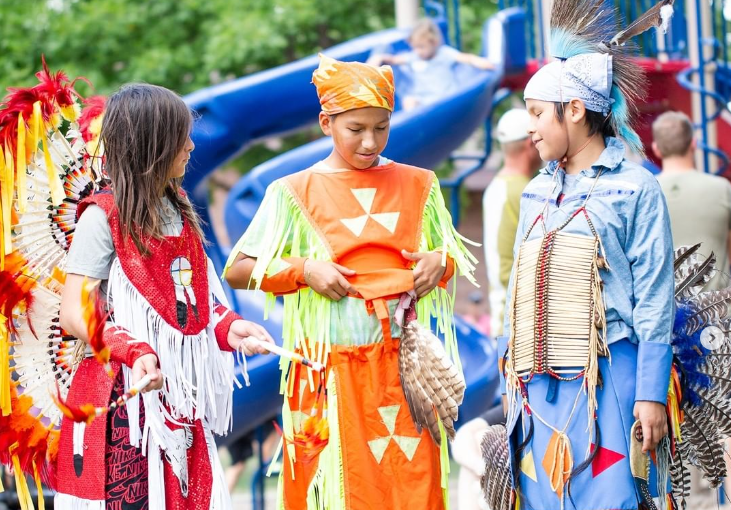
St. Joseph’s powwow is unique in that it is for tiny tots through teens only. Benefactors from all over the world come to Chamberlain to learn about the school and enjoy the talented dancers who include about half of the student body as well as other youth who come from neighboring communities in South Dakota. Many attendees, including some of the school’s students, follow the powwow circuit.
The afternoon-long event begins with the Grand Entry when groups of dancers follow a color guard into the arena. Dancers in colorful regalia gracefully move around the circle, with the drumbeat directing their movements. The tradition is passed from one generation to the next.
Though dance styles and content have changed, the meaning and importance of the dance remains the same. No other event captures the Native American spirit like the powwow.
Months of Preparation, One Day of Celebration
Powwow preparations begin as soon as the first bell of the school year rings in early August. A seasoned team of employees goes to work at once planning everything from start to finish like a well-oiled machine. At 40-some years into the event, planning and coordination are well-rehearsed and run smoothly.
The Art of Powwow Dance
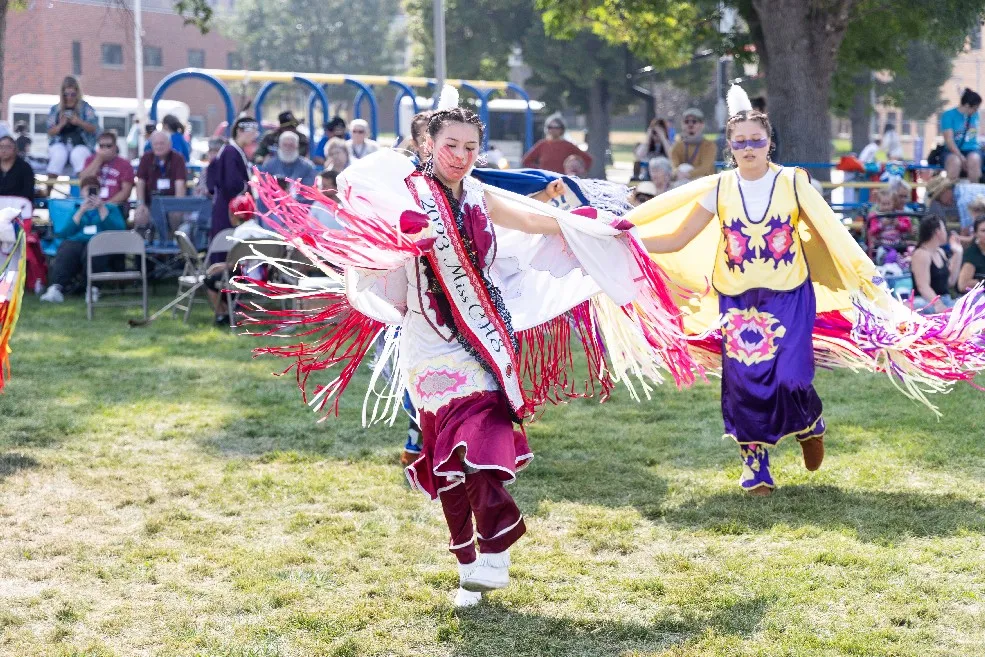
Getting the students prepared – that’s a little trickier but surely more exciting. More than 100 students commit to the dance group much as they would to a team sport. Nearly 10 hours of group practices take place during the five weeks leading up to wačhípi, and students practice at home and school, too. Once they demonstrate commitment to the dance group, they choose an outfit for their specific style of dance from St. Joseph’s beautiful collection of regalia.
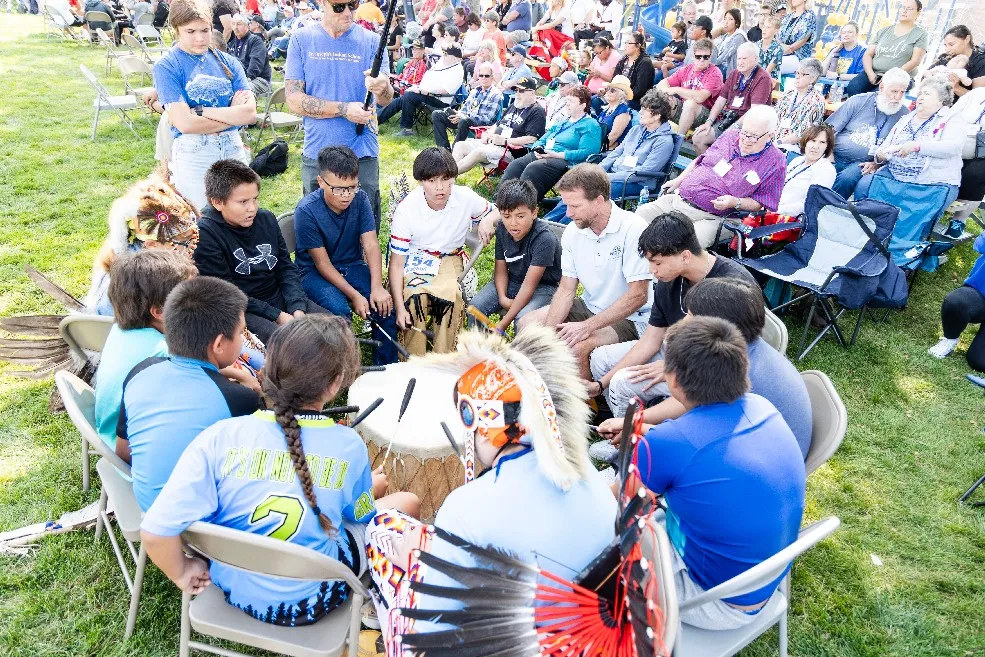
The Art of Powwow Drumming
Drummers make a commitment as well, and practice up to 20 hours during the same time period. The drum group continues to practice throughout the year and performs at ceremonies, honoring, Lakota Mass, prayer services and monthly dance nights at the Rec Center, which are open to everyone. St. Joseph’s Indian School’s drum group is called the Chalk Hills Singers – Pahá Makȟásaŋ Lowáŋpi – after the land directly north of the school in Chamberlain, S.D.
“When I am in my regalia, that’s when I feel most grounded. My culture is who I am, not who I want to or have to be”
Angelina (Miss St. Joseph’s senior fancy and jingle dancer)
Powwow Dance Styles
There are three separate powwow dance styles that you will see as boys and girls compete at St. Joseph’s Indian School’s wačhípi. Students specialize in one of these styles.
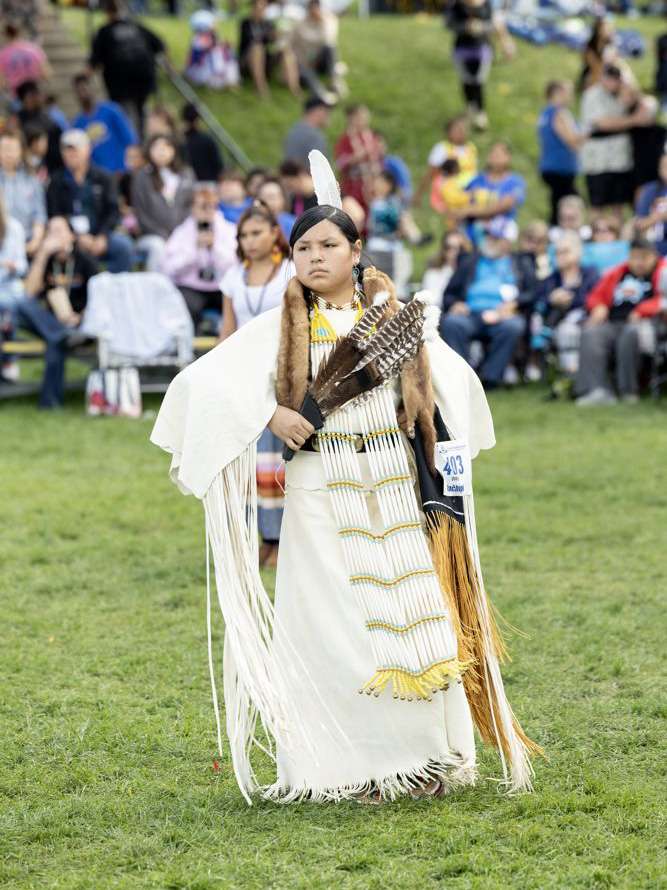
Girl’s Traditional Dance
The movement of this dance simulates the way a woman would turn and look for her warrior’s return from battle or hunt. The dancer acknowledges certain words or phrases in a song by raising a feather fan. Regalia is made of animal skin or trade cloth in ceremonial colors and is adorned with ribbon, beadwork, elk teeth or shells. The outfit is accented with decorated moccasins, a belt with a knife sheath, a breastplate and various pieces of jewelry. Today, shawls have replaced the blankets and buffalo robes that were traditionally worn.
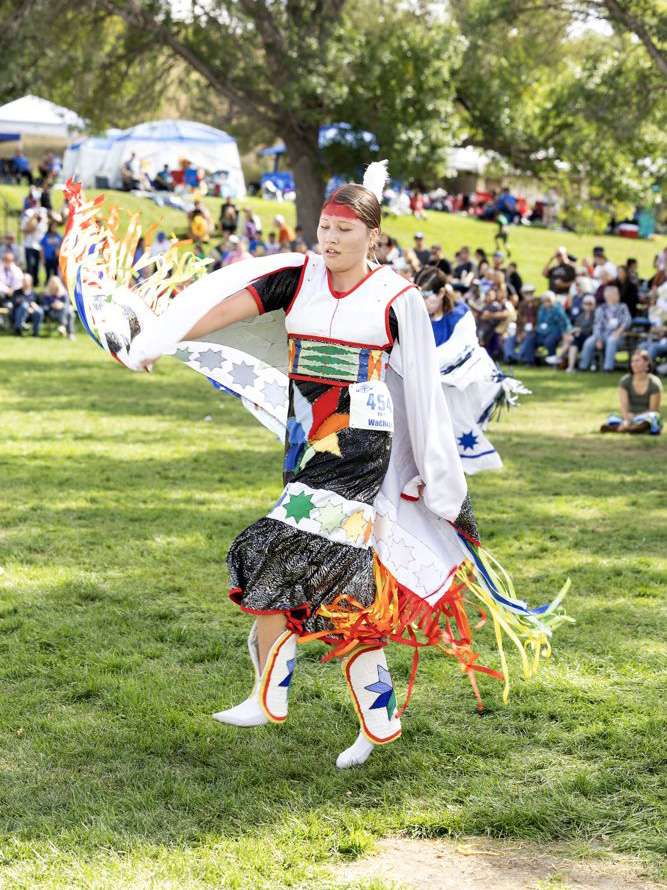
Girl’s Fancy Dance
Footwork synchronized with shawl movement is the important element of this dance, which simulates the movement of a butterfly or bird. Regalia is a shawl worn with a yoke. A dress or skirt, matching leggings, beaded moccasins and jewelry accessorize the outfit.
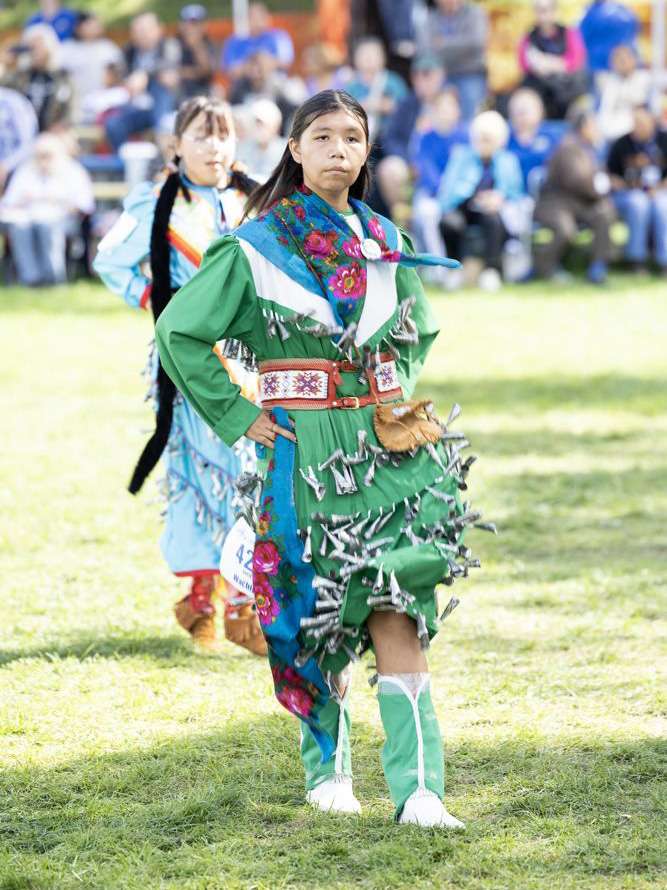
Girl’s Jingle Dance
This dance originated in Minnesota with the dream of a holy man. The dancer waves a feather fan to honor the drum, the heartbeat of the people. Regalia is made of beautiful cloth adorned with hundreds of rolled metal cones that jingle with the dancer’s movement.
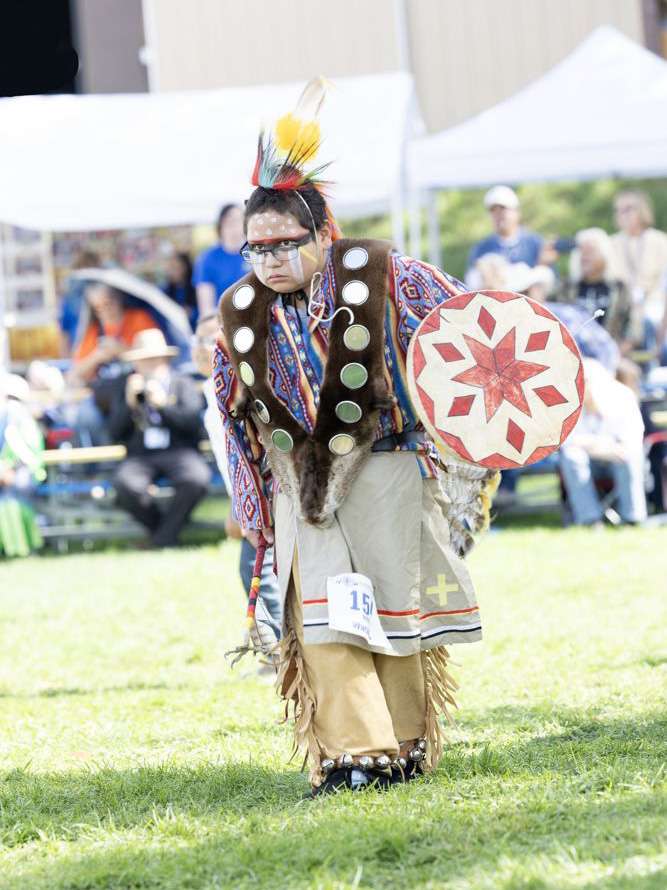
Boy’s Traditional Dance
The traditional dance tells the story of a battle or hunt with movements patterned after animals, birds, or the tracking of the same. Dancers carry items such as a shield or honor staff to symbolize their status as warriors. Regalia, in subdued earth tones, is decorated with beads and porcupine quillwork and includes a circular feather bustle and a breastplate.
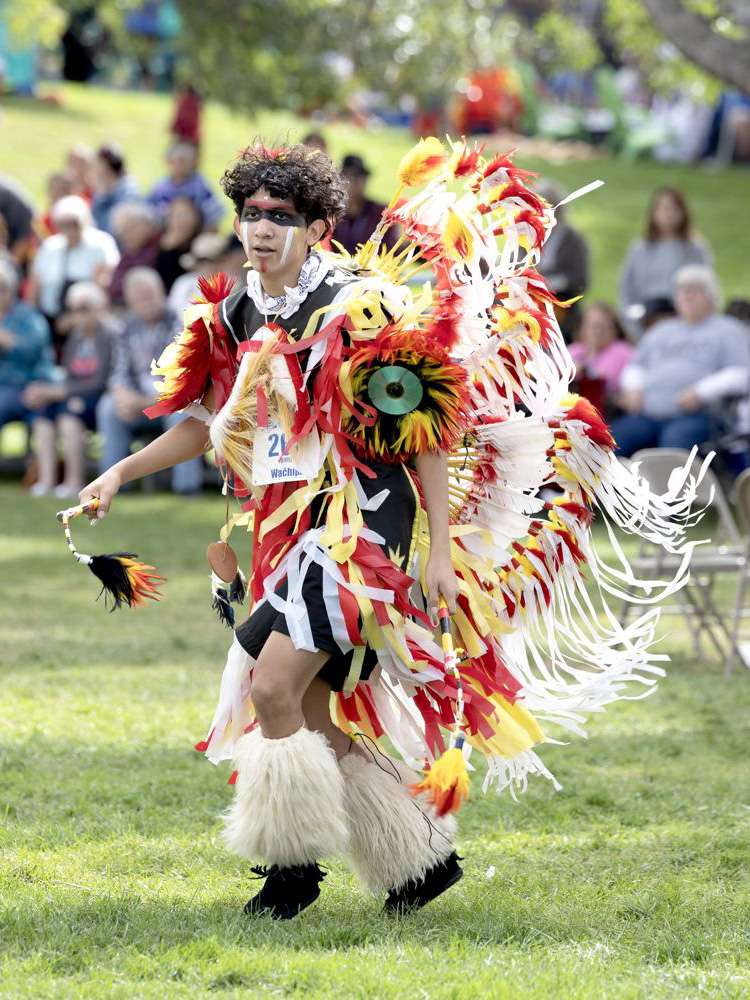
Boy’s Fancy Dance
The newest form of powwow dance, the fancy dance originated in Oklahoma when the powwow became a more of a public event. The dance is noted for its speed and includes intricate footwork, acrobatic steps and movements. More vividly colored than traditional regalia, fancy dance regalia includes two brilliantly colored bustles and can include a breach cloth, cape, bells, fur, sticks, armband and more.
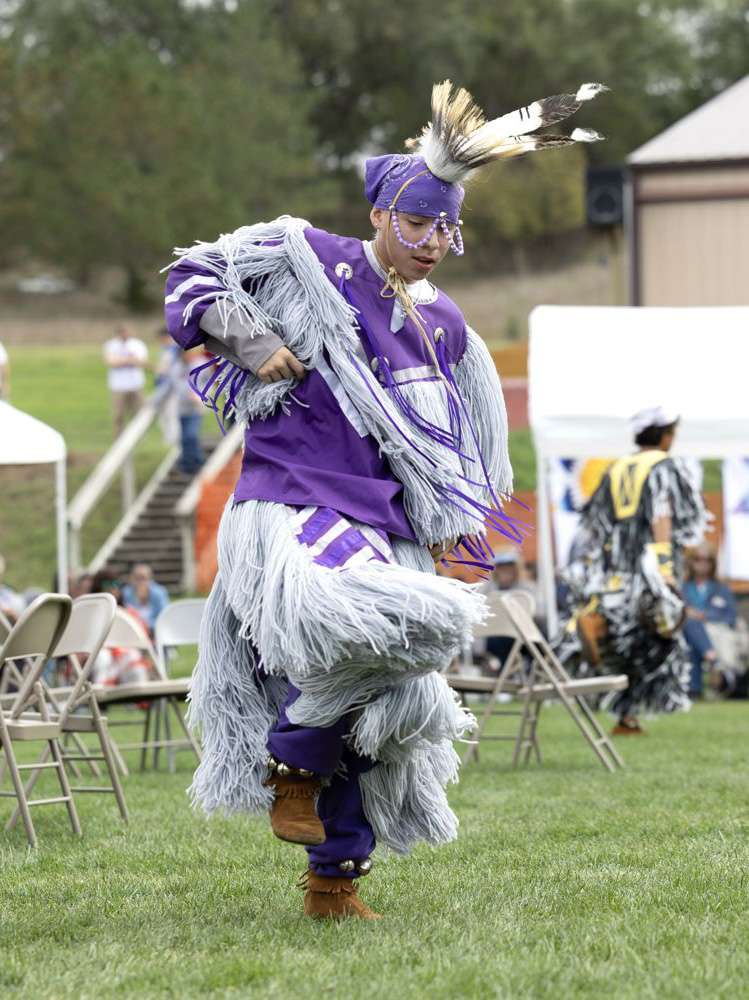
Boy’s Grass Dance
Adapted from the Omaha tribe, the grass dance is the first dance performed in order to flatten the long grass in preparation for the wačhípi. The movement and long colorful fringe on the regalia simulate the flowing grasses of the prairie. A porcupine hair roach or pȟeša graces all male dancers’ heads in this free-styled, symmetrical dance that follows the changing beat of the drum.
Chamberlain, SD 57325-0089
An Apostolate of the Congregation of the Priests of the Sacred Heart