Our Founders
The Priests Who Started Our Story
Since 1878, the Priests of the Sacred Heart have welcomed people into a caring community, following the vision of Venerable Leo John Dehon. Their mission is to share Christ’s love and help build a world filled with justice and kindness. Through their ministries, they reach out to those in need around the world, support Catholic education, and care for retired priests and brothers.
From the start, the Priests of the Sacred Heart have answered the call to serve wherever they are needed most. They bring hope and help to people facing tough challenges, both near and far. Their work includes caring for the sick, teaching, building homes, supporting public health, and offering spiritual guidance. No matter where they go, they are there to make a difference.
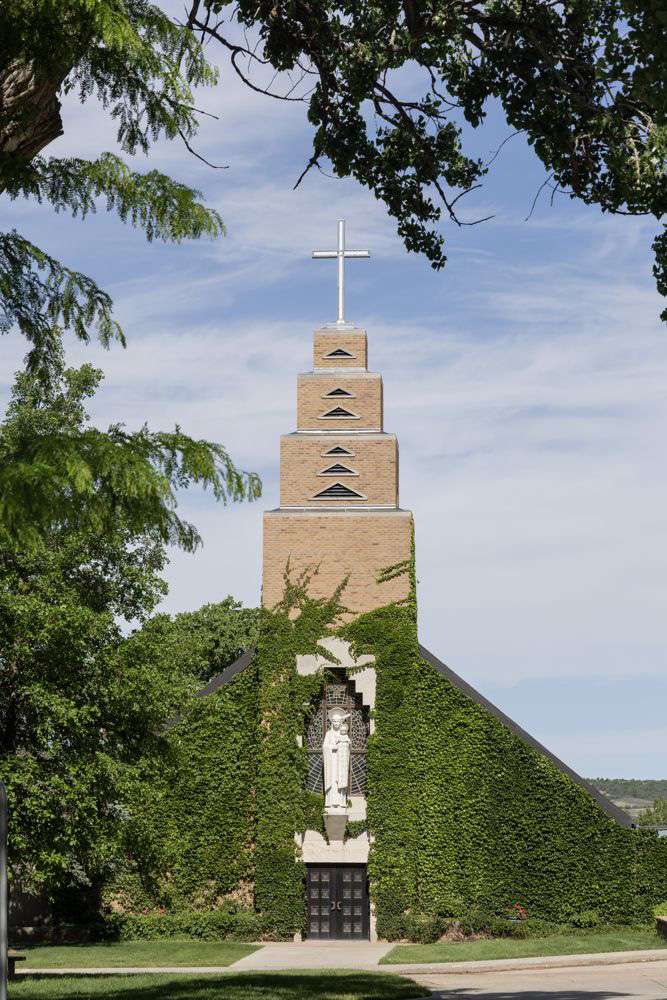
The Priests of the Sacred Heart began their journey in the United States in 1923, starting on the Lower Brule Reservation in South Dakota. Just a few years later, they opened St. Joseph’s Indian School. Today, their ministry in South Dakota has grown to include six parishes and a center that supports women and children in need. You’ll also find their caring presence in places like Hales Corners, Wisconsin, Northern Mississippi, and Houston, Texas, where they continue to serve through schools, parishes, and outreach programs.
Our Spiritual Founder
Fr. Leo John Dehon
Before St. Joseph’s Indian School opened its doors, a spiritual movement began in France. Fr. Leo John Dehon believed deeply in active ministry and social justice. His vision laid the groundwork for the Priests of the Sacred Heart (SCJs), the religious order that would eventually establish our school. He believed in responding to God’s love by trying to meet the needs of those around us.
Key Milestones
March 14, 1843
Born in LaChapelle, France.
December 19, 1868
Ordained a priest.
October 8, 1869
Served as a clerk for the First Vatican Council.
November 16, 1871
Began impactful local ministry at Saint Quentin, France.
June 28, 1878
Founded the Congregation of the Priests of the Sacred Heart (SCJs).
August 12, 1925
Passed away in Brussels, Belgium, leaving behind a global legacy of love and service.
To learn more about our global order, you can visit
Bringing the Mission to South Dakota
Fr. Henry Hogebach
In the early 1920s, a group of SCJ priests from Germany arrived in the United States with a dream to establish a presence in the country. Among them was Fr. Henry Hogebach, a man of incredible dedication and relentless drive.
-
1923: Fr. Hogebach’s ministry led him to the Lower Brule Reservation in South Dakota, where he saw a profound need for a dedicated school for Native American children.
-
Spring 1927: With vision and faith, Fr. Hogebach received permission to purchase the vacant Columbus College campus at Chamberlain, South Dakota, for $40,000.
-
Fall 1927: St. Joseph’s Indian School officially opened its doors to 53 Lakota boys and girls.
A Different Kind of School
Though St. Joseph’s Indian School operated during the era of government boarding schools, it was fundamentally different from its inception. At St. Joseph’s, was never a government school. Native American parents chose to send their children here, creating a foundation built on trust and partnership rather than coercion.
Overcoming Hard Times
The early years of the school were marked by extreme hardship. Yet, through God’s grace and Fr. Hogebach’s tireless dedication, the school successfully opened every single fall.
Fr. Hogebach spent much of his time traveling and raising funds to keep the school afloat. Donations of clothing, shoes, medication, and supplies were meticulously managed to ensure the children and the Sisters had what they needed—a tradition of stewardship that continues to this very day.
The Arrival of the Sisters
Once the buildings were secured, Fr. Hogebach lost no time developing the school into a true community.
-
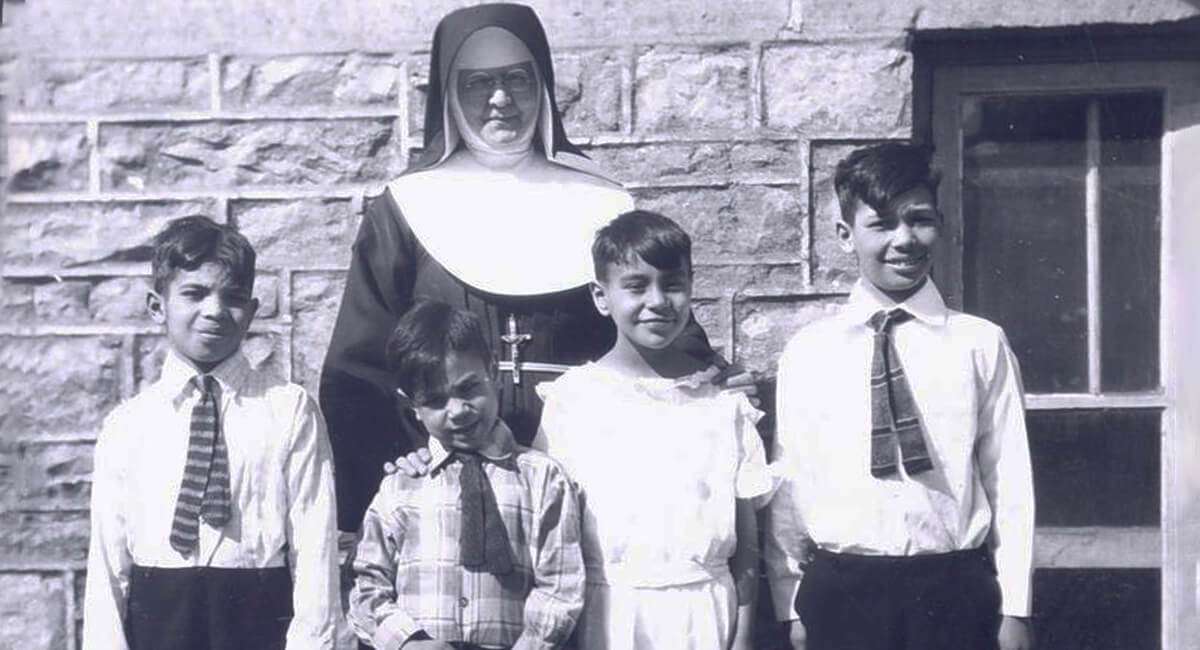
Winter 1928: Fr. Hogebach traveled east to recruit religious sisters to help run the school. He found four Franciscan Sisters in Glen Riddle, Pennsylvania. Their demanded “salary”? Simply a daily prayer for blessings on their community and for vocations.
-
September 1929: The Franciscan Sisters arrived just days before the school year started. Sr. Quitteria, a veteran educator with 32 years of classroom experience, took charge alongside Sr. Jeanne, while Sr. Columba, Sr. Lillian, and Sr. Ambrosia took over the domestic care of the campus.
That same September, the school bus brought 75 Lakota children from the Cheyenne River Indian Reservation to Chamberlain. Under the gentle guidance and care of the sisters, the mission transformed from a strict institution into a true, warm home—dissolving many of the hardships of the very first year and setting a precedent of care that defines St. Joseph’s today.